
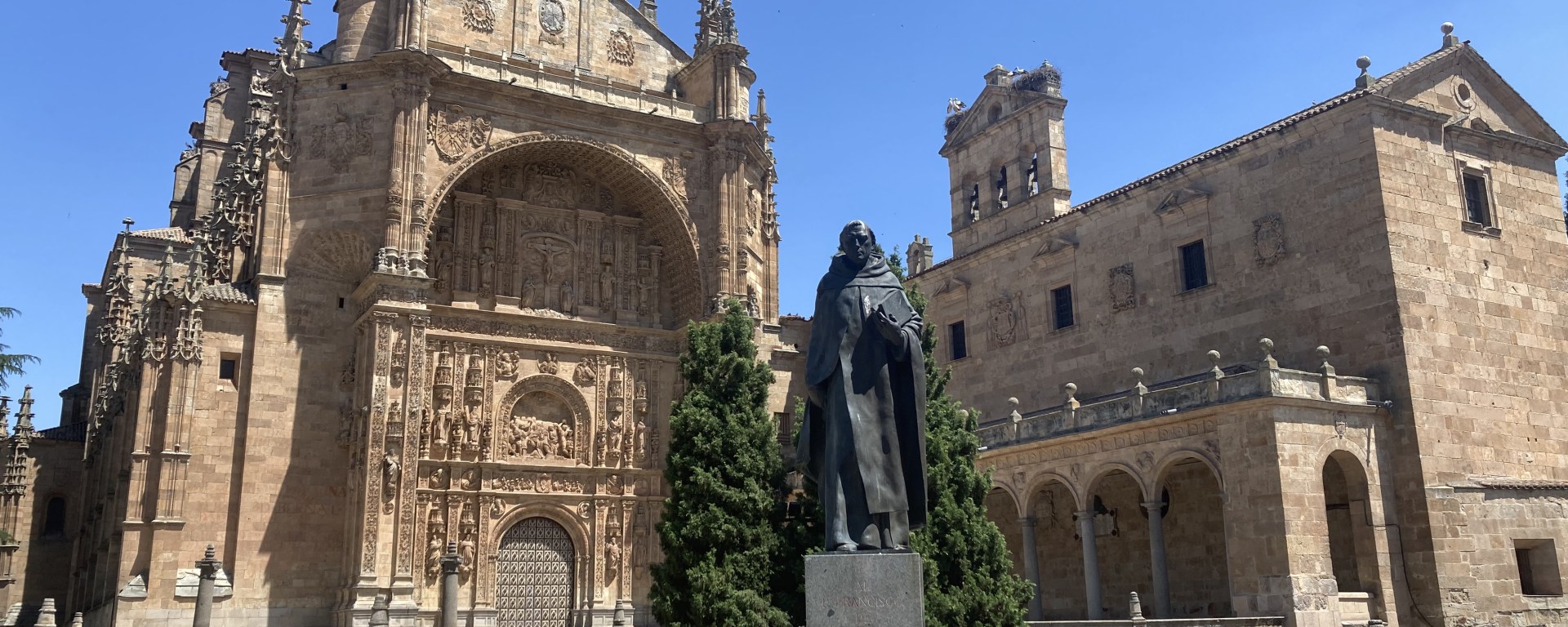
More than just an architectural gem, the Dominican monastery welcomed a multitude of historical figures, including Saint Teresa of Ávila and even Christopher Columbus
In a place like Spain, it’s easy for tourists to get overwhelmed with so many historical churches, cathedrals, and convents. On more than one occasion, people have shown me beautiful photos from their trip, but they were unable to recall any of the names of the places or why they were important. I get it. It happens to all of us, if we’re honest. However, as I get older and more aware of my own mortality and limitations, I’m much more appreciative of the places I get to visit now. I make a better effort to care about the places I visit, not knowing, of course, if I’ll ever have the opportunity to return. My posts in this journal force me to relive the experiences I have been fortunate enough to have.
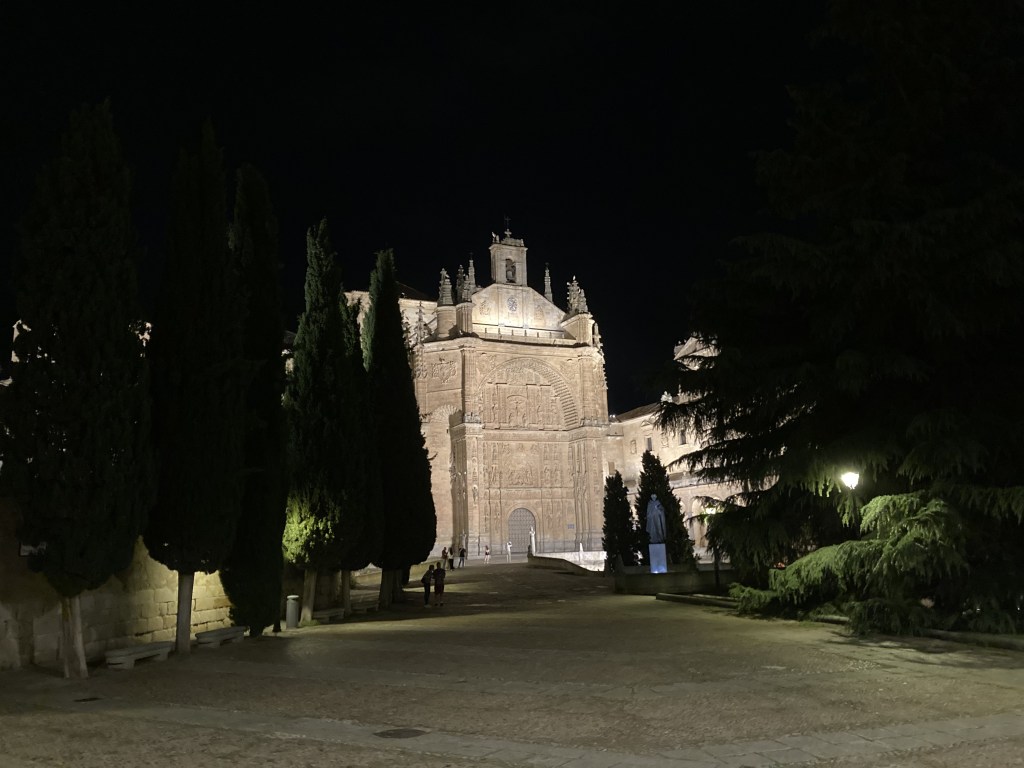
Out of all the cathedrals and other religious places I’ve visited in Spain, there are a few that stand out as truly exceptional to me, although they all are breathtaking in their own right. One such standout location is the Convento de San Esteban in Salamanca. The monastery we see today, home to the local Dominican monks, commenced construction in the early 16th century, and it was built over the original monastery, where, they say, Christopher Columbus stayed for a time to discuss his navigational plans to sail west, all the way to the Indies, in his meetings with renowned geographers at the nearby Universidad de Salamanca and friars at the monastery.
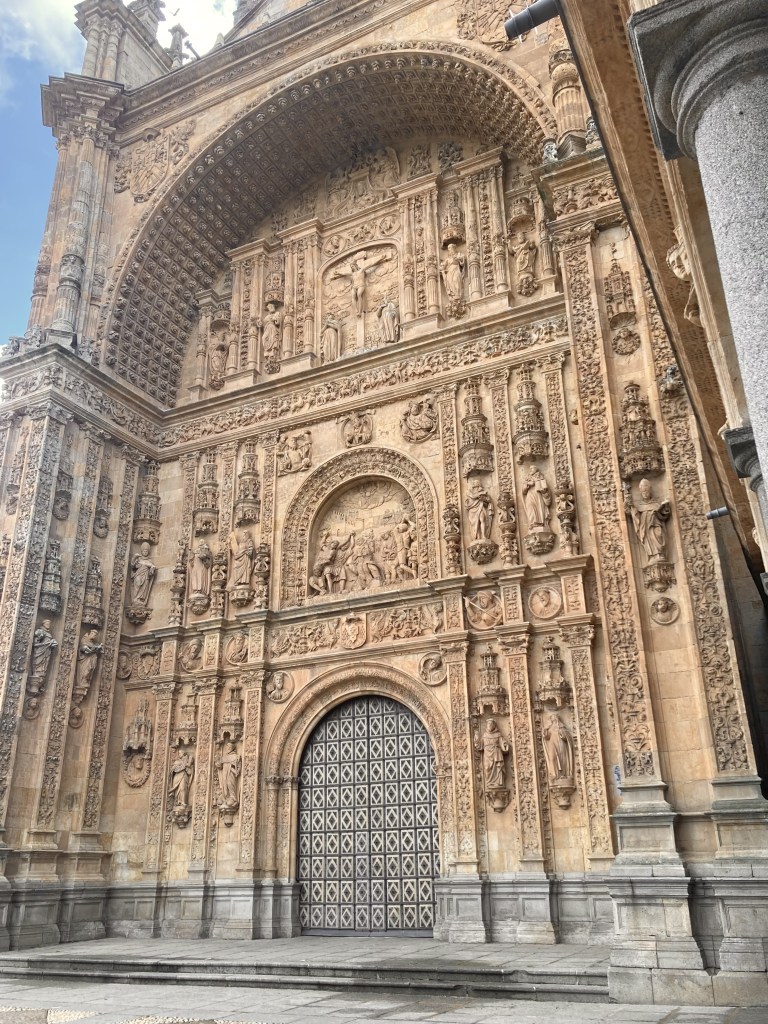
The monastery we visit today, built over the old one, was a collaborative effort, on which some of the most heralded Spanish architects and sculptures worked throughout the years, including Juan de Álava (1480-1587), Rodrigo Gil de Hontañón (1500-1577), and José Benito de Churriguera (1665-1725). The style of the intricate façade is plateresque, which is so decorative, detailed, and even flamboyant, that I can’t help but wonder why it went out of style after the Renaissance. I mean, I understand that trends come and go, but I question whether it is even possible for architects and artisans to imitate this movement today. Many of the ornate details of the Sagrada Familia church in Barcelona were created in the last century, of course, so the technology and workmanship can’t be the main issues. I suppose it could be that the Spanish Golden Age architects were profoundly inspired by God in a way that modern architects are not. But I digress; I’ll ask whoever runs an architectural blog to pontificate on such matters.

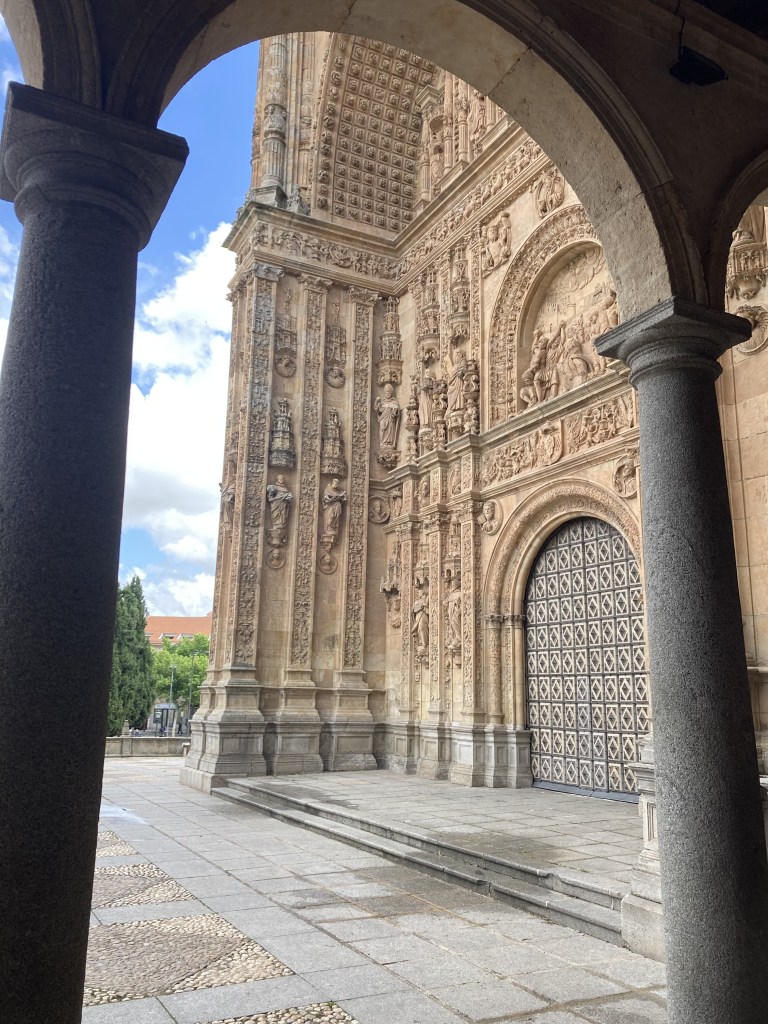
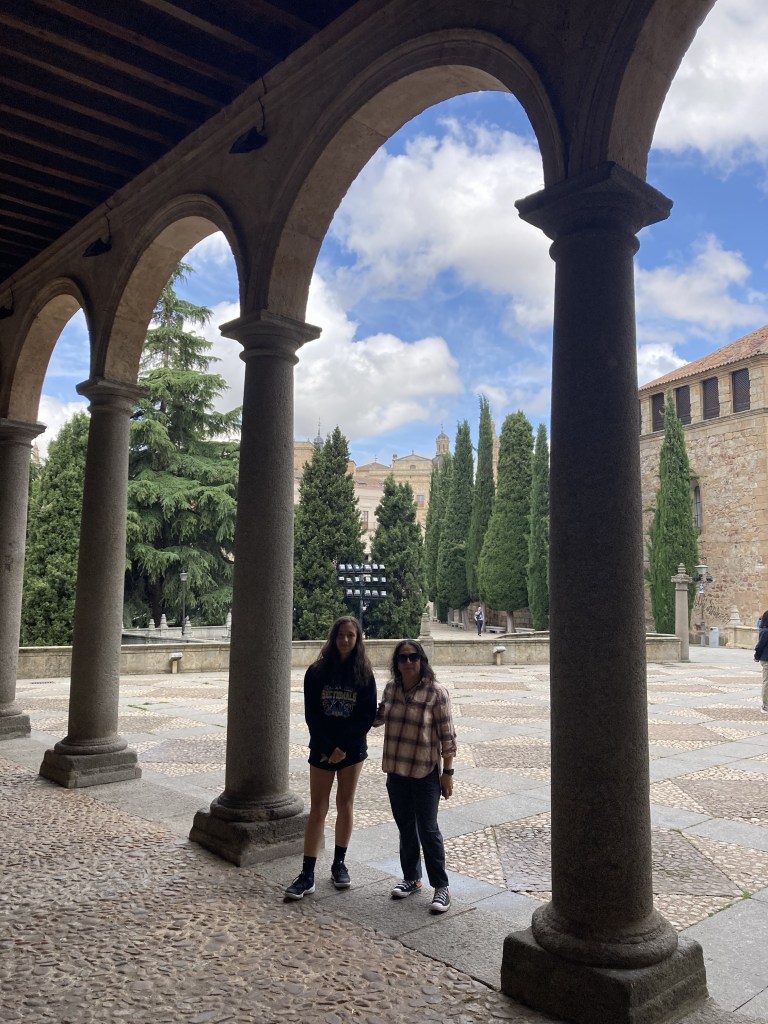
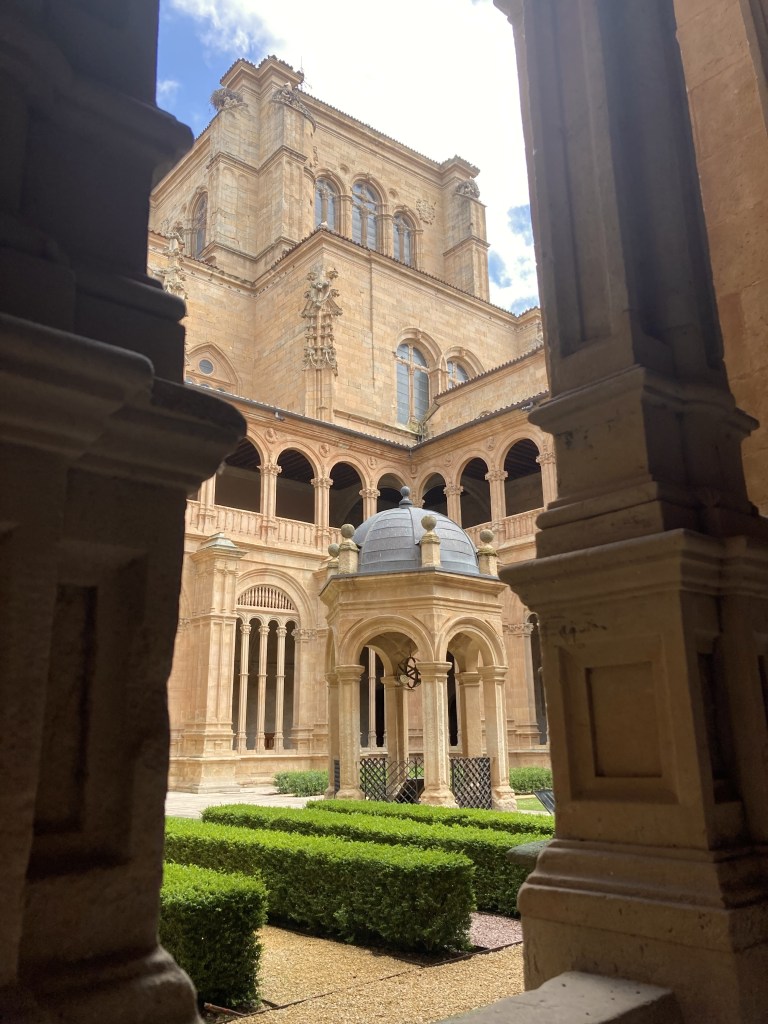
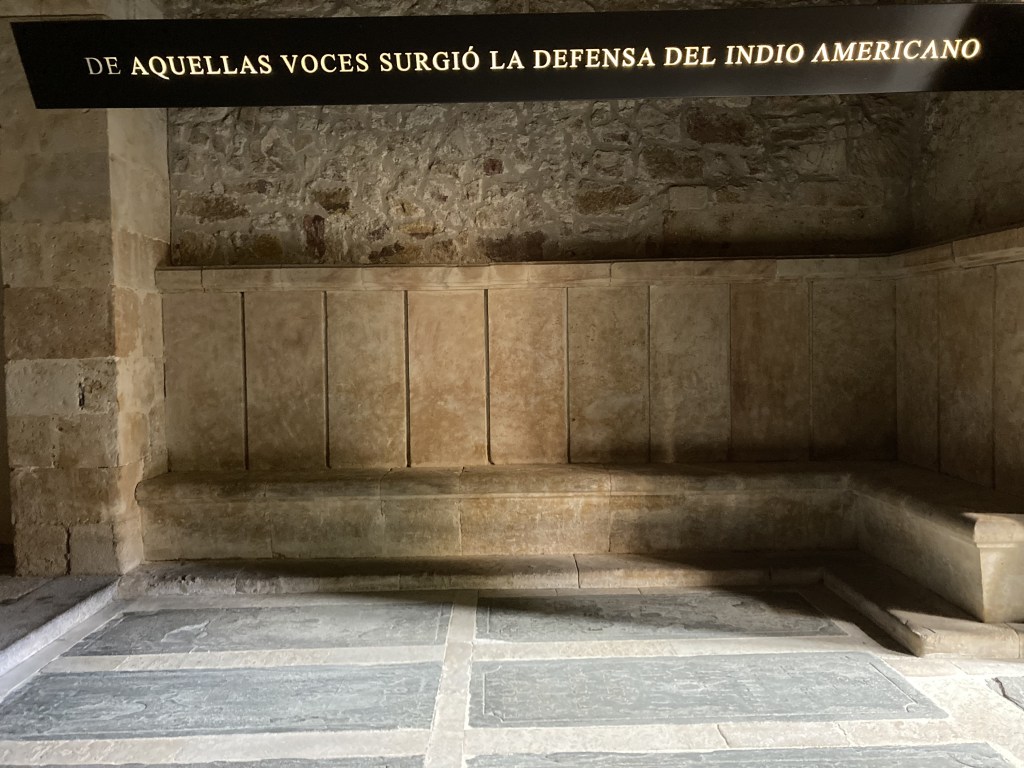
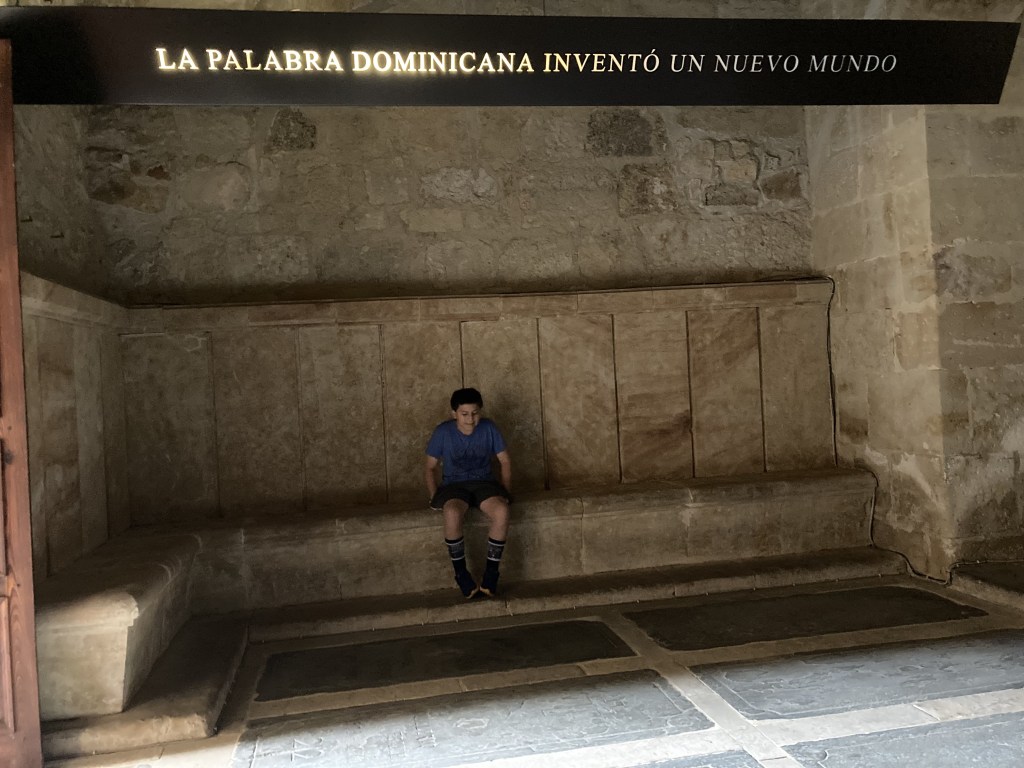
As I walked to the main interior patio of the Convento de San Esteban, I was in awe. Not only are the architectural details exquisite to behold, but the feeling you get in the extremely quiet space, touching stone columns that are hundreds of years old, walking where people like Saint Teresa of Ávila and Saint Ignatius of Loyola have walked… I can only describe it as a profound reverence. There are various rooms around the patio that lead the visitor to learn about the history of the monastery. One such room is very dark, but you can make out the tombs of permanent residents of the monastery on the floor you walk. There are built-in stone benches on each side, and there’s an almost eerie recording of a narrator explaining that in rooms such as this, the monks would meet to discuss the evangelization of the indigenous American peoples. The narrative that is underlined throughout the monastery is that the Dominicans defended the rights of these people; they did not consider them to be soulless savages, as other people of the time contended. There seems to be a real concerted effort here to counter the popular narrative we hear so often today that those Spanish missionaries forced the natives to convert and mistreated them.
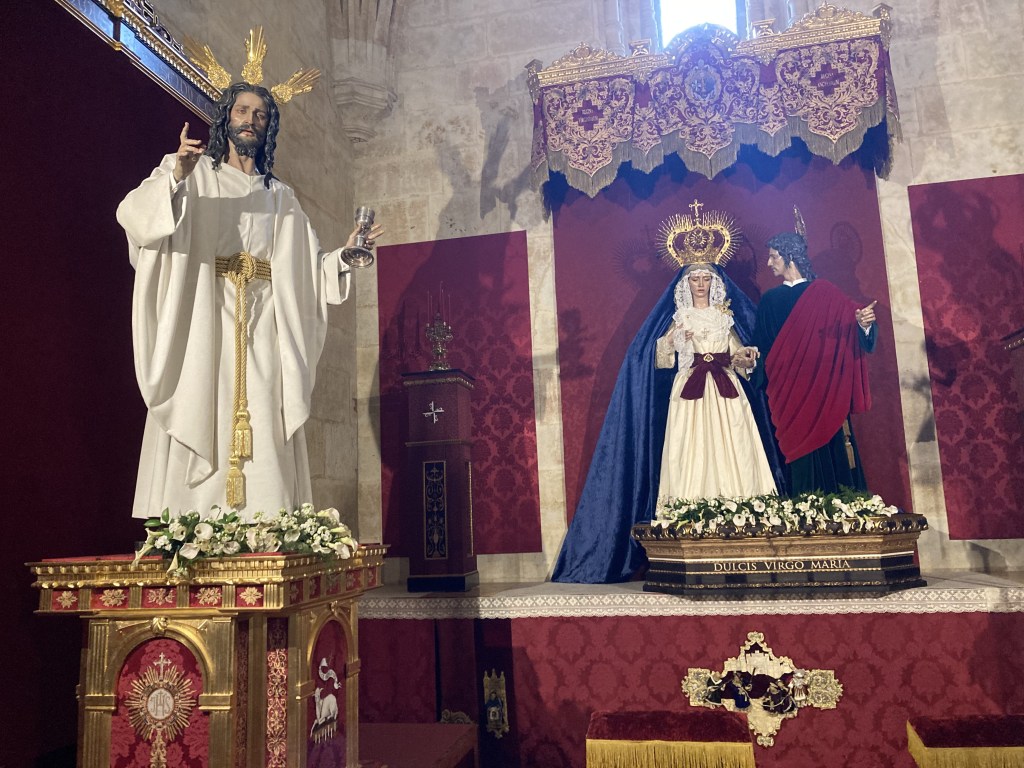

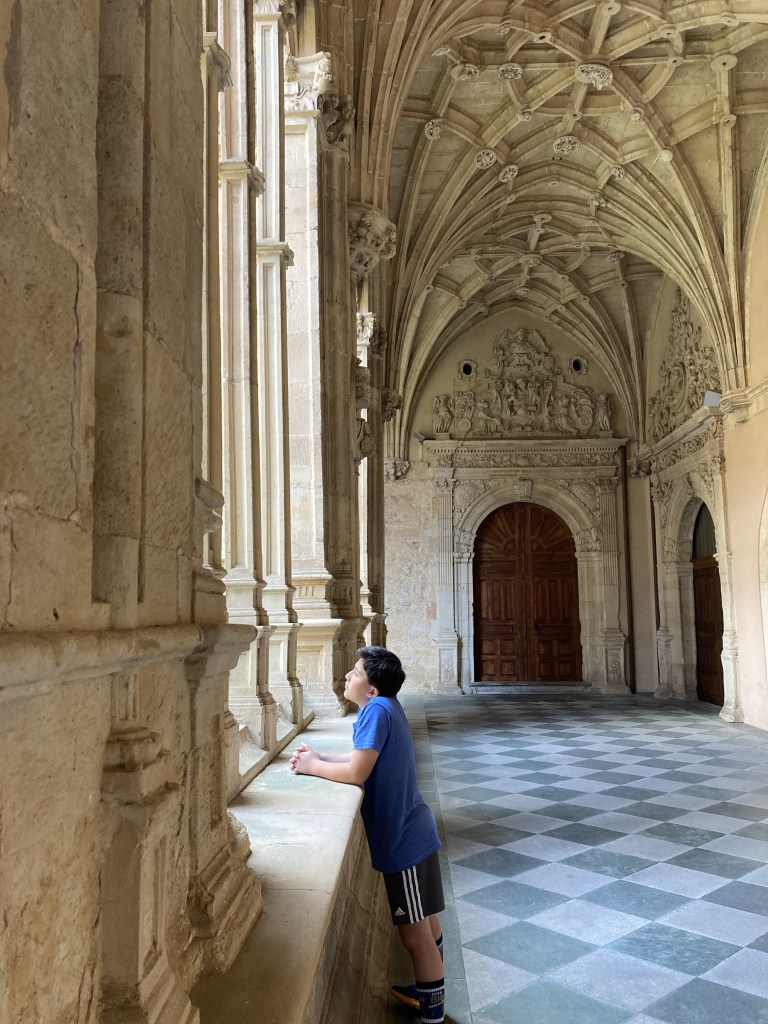
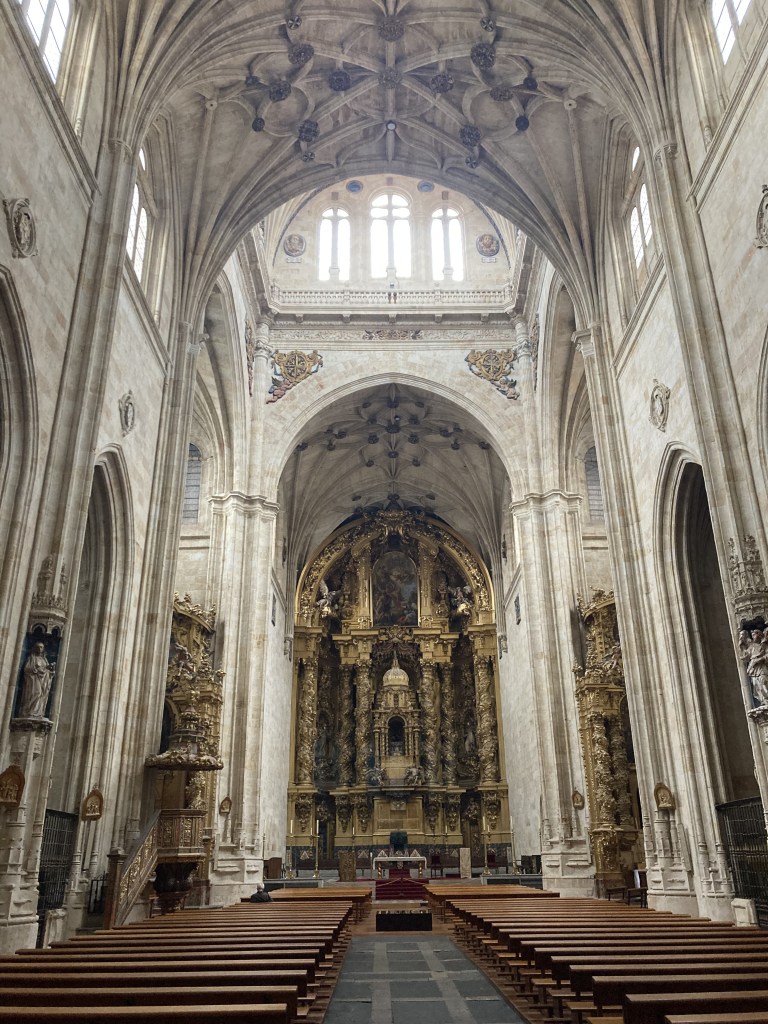

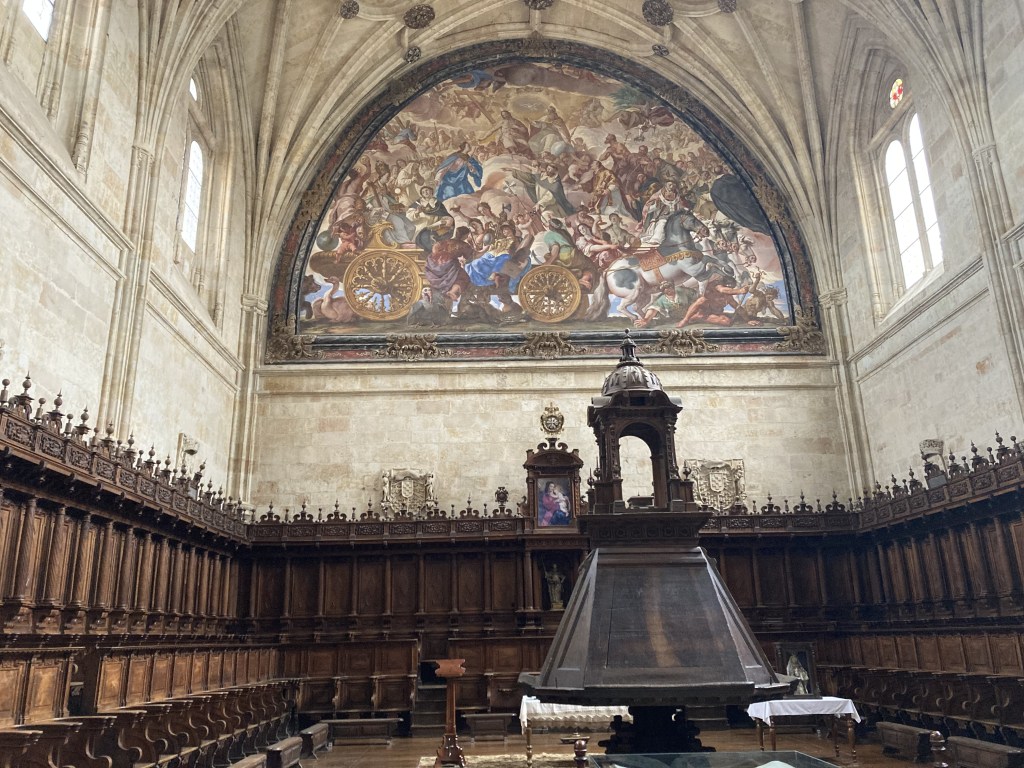
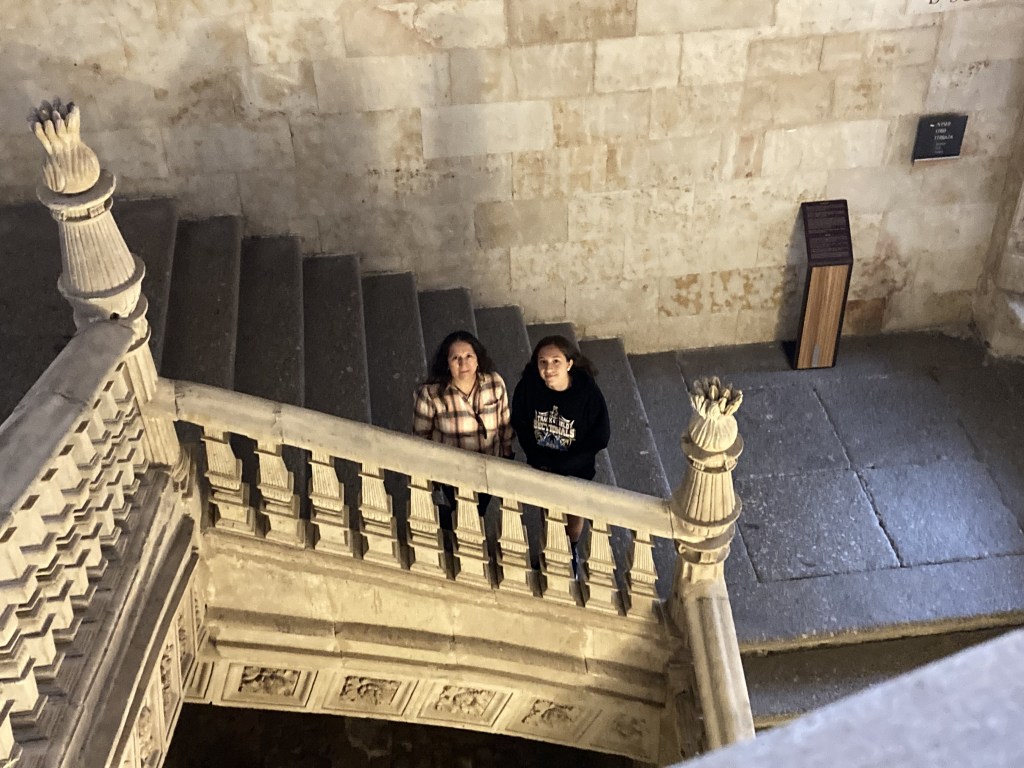
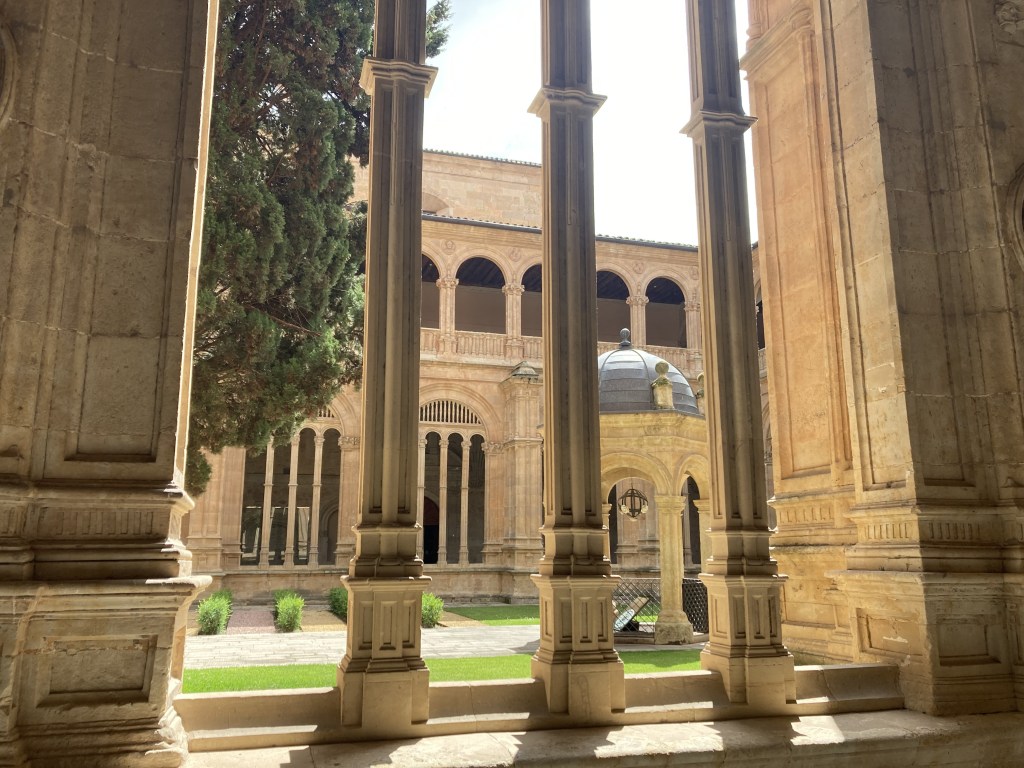
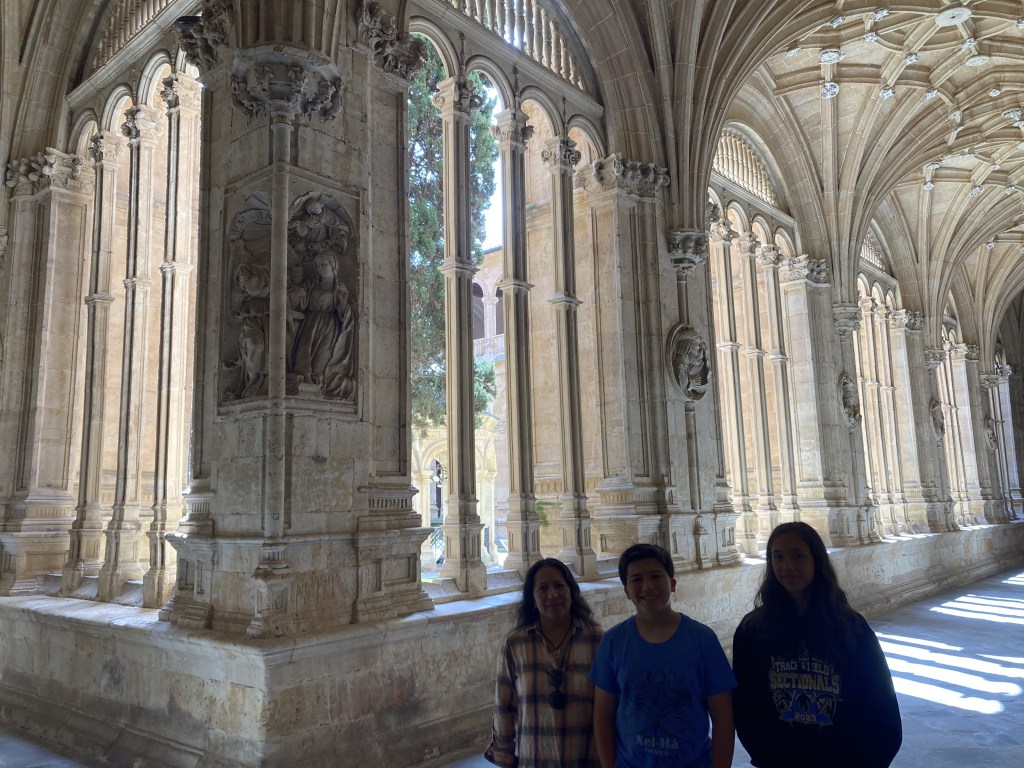

Eventually, one gets to the main church of the monastery, which is second to none in terms of its beauty. The main altar is by Churriguera, and all of the statues in the side chapels are well maintained. In one of my visits, we even saw an artist who was repainting one of them. It would’ve been wonderful for me to have had the opportunity to hear a mass or pray a rosary here. We had to satisfy ourselves with the lighting of some candles and saying some brief prayers. The sacristy is also open for visitors, and it really looks like a museum of Spanish catholicism. Appropriately enough, the monastery has its own museum on the second floor; to get there, you have to climb a massive staircase that must be so heavy that you wonder how it even stayed attached to the rest of the structure for over 400 years. The museum has lots of religious artwork, of course, including paintings and sculptures, but I was so impressed with its collection of relics. Now, it could be that it’s because I don’t really read Latin that well, but the inscriptions on some of the relics looked like they were from the original 12 apostles and others who knew Jesus Christ himself, like the Blessed Virgin Mary. That is amazing to think about, but I was also a bit confused because if the relics of the Blessed Mother were first class relics – meaning that they were a part of her physical body – they shouldn’t be here at all since she was taken to heaven in the Assumption. The visits to the monastery are self-guided, which makes getting answers to questions like these a bit challenging. Some, though not all, of the explanations given on panels include English translations.
Around the walls of the second floor, you can read many of the famous quotes by Francisco de Vitoria (1483-1546), a statue of whom is prominently displayed outside the monastery, not far from its main façade. Vitoria played an important role in the early history of the Dominicans and that of the monastery, and you can see his name on one of tombs on the first floor. He seems to be something of an inspirational figure who still guides the monks here today. He also would have been here when important figures like Saint Teresa of Ávila or Saint Ignatius of Loyola, founders of the Carmelites and Jesuits, visited the monastery looking for assistance for their endeavors. And speaking of Santa Teresa, the monastery pays homage to this beloved saint in a couple of ways. In the church itself, there’s a doorway under which she would have gone to make her confessions; you can see the picture of that doorway above. And on the first floor of the main patio, there’s a room you can enter marked as El confesionario de Santa Teresa. There’s just enough space here for one person to sit down on a primitive chair, and your movement into the room triggers a video to play in front of you on a screen that is made to look like that of a confessional. And there’s an actress who plays Saint Teresa who confesses to you as if you were a priest. Towards the beginning of her speech, she realizes that you are not her regular confessor, which is kind of funny. I don’t always like the use of modern technology in sacred spaces, but I thought this was pretty cool. Below is a video I made of the experience.
The Convento de San Esteban was probably my favorite place to visit in Salamanca. In the month we spent in Salamanca, we visited the monastery three times: once at the beginning to see what it was like, once with a group of my students, and once at the end of the trip to get just one final taste of it. I can’t help but think that if I weren’t married and I didn’t have children, that being a monk here wouldn’t be a bad life at all. The place is peaceful, the friars have meaningful work with their brothers, and they spend their life contemplating the greatest mysteries of all. The convento is open daily from 10:00 AM to 1:30 PM, and from 4:00 to 6:00 PM, although times can change during different seasons and on holidays. You do have to pay to get in, but it’s not expensive. I don’t recall how much exactly it cost us, and that information wasn’t available on its website, although other websites list prices, but they don’t all concur. It was probably somewhere around 4 euros to get in, but I could be off a little bit. Don’t make the mistake of passing by the Convento de San Esteban without going in, thinking that it’s “just another religious place.” On the contrary, you won’t regret spending a few tranquil hours here.
Have you ever visited a really great convent or monastery? Have you ever been to the Convento de San Esteban? Let us know about it in the comments below. And if you liked this post, please share it on your favorite social media. ¡Gracias!


 Hispanophilia