
The Spanish writer’s former home offers a fascinating glimpse into an important period of Spanish literature and history
One of my favorite writers – in any language, from any region, and from any time period – is Miguel de Unamuno (1864-1936), who was proficient in so many fields. In the field of literature alone, in which he is often remembered for being a foremost representative of the so-called Generation of 98, he wrote a little bit of everything, including novels, short stories, poetry, essays, and even theater. As if that weren’t enough to create a name for himself, he was also an accomplished philosopher and professor. At the end of his career, he even became the rector of the Universidad de Salamanca, Spain’s oldest and most prestigious university at the time. He was even extremely proficient in art and origami. While he was originally from Bilbao, in País Vasco, his house-museum in Salamanca may be the spot where one can get the most inside perspective of his life and works. It’s hard for me to think of anyone who used their time on this planet more efficiently than Miguel de Unamuno.
The casa-museo itself isn’t that big, and it’s quite easy to pass by it on the street and not even realize that you did. Tickets can be bought from the automated ticket counters at the Universidad de Salamanca, through the doors under the famous façade that all tourists in Salamanca know; the museum is a short walk from there. Its operating hours are somewhat restricted, opening to the public only from Monday through Saturday from 10:00 AM to 2:00 PM, with the last visitors being admitted no later than 1:00. You have to buy your tickets to attend at a particular hour, and you have to wait outside the museum until a staff member lets you in at the designated time. While this protocol seems a bit restrictive at first compared to how easy it is to locate and enter other museums, the attention we received was extremely worth any minor inconvenience. At our assigned time, my family of four was accompanied by only one other couple, giving us an almost personalized tour of the museum and many opportunities to ask questions.

The tour began on the lower level, where we sat in a large room that would have been used for receptions at the university during the time of Unamuno’s leadership, from 1900 to 1914. There, our guide showed us a short video, embedded above, that told us about the life and times of Unamuno, as well as the building we would be exploring.
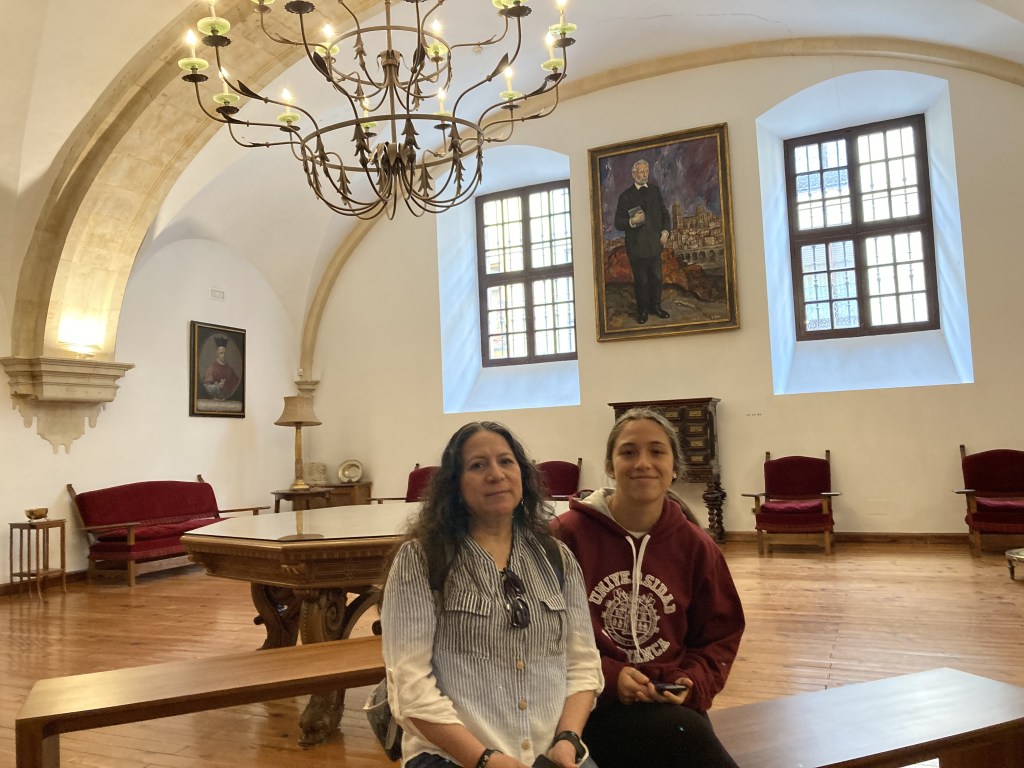
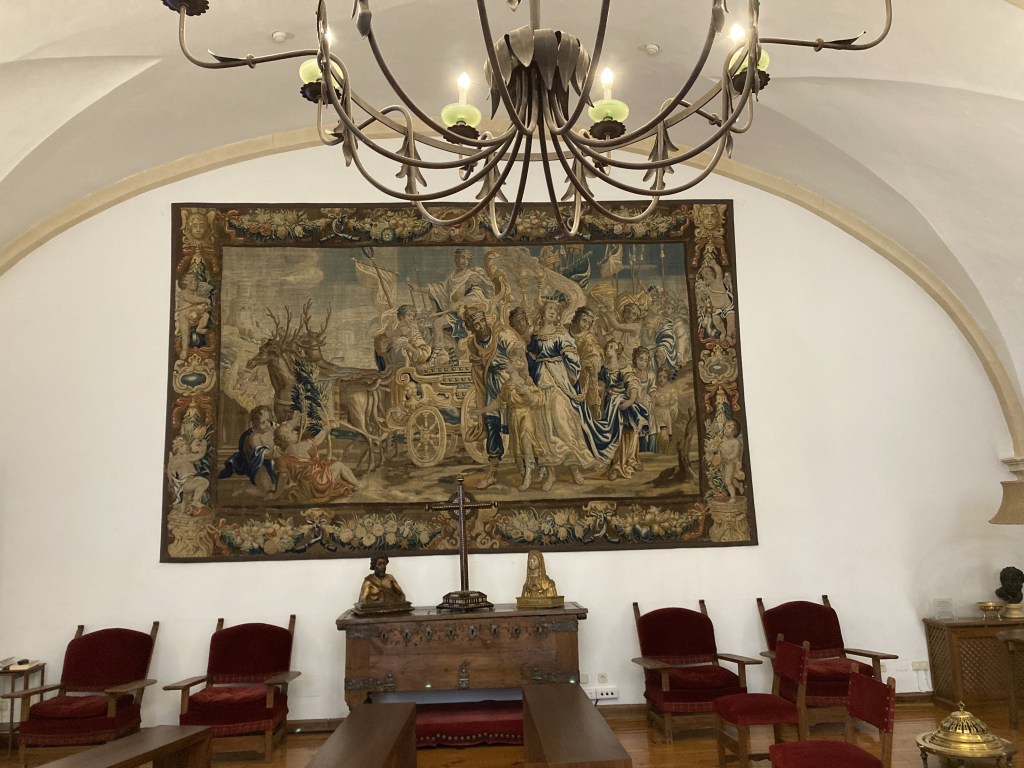
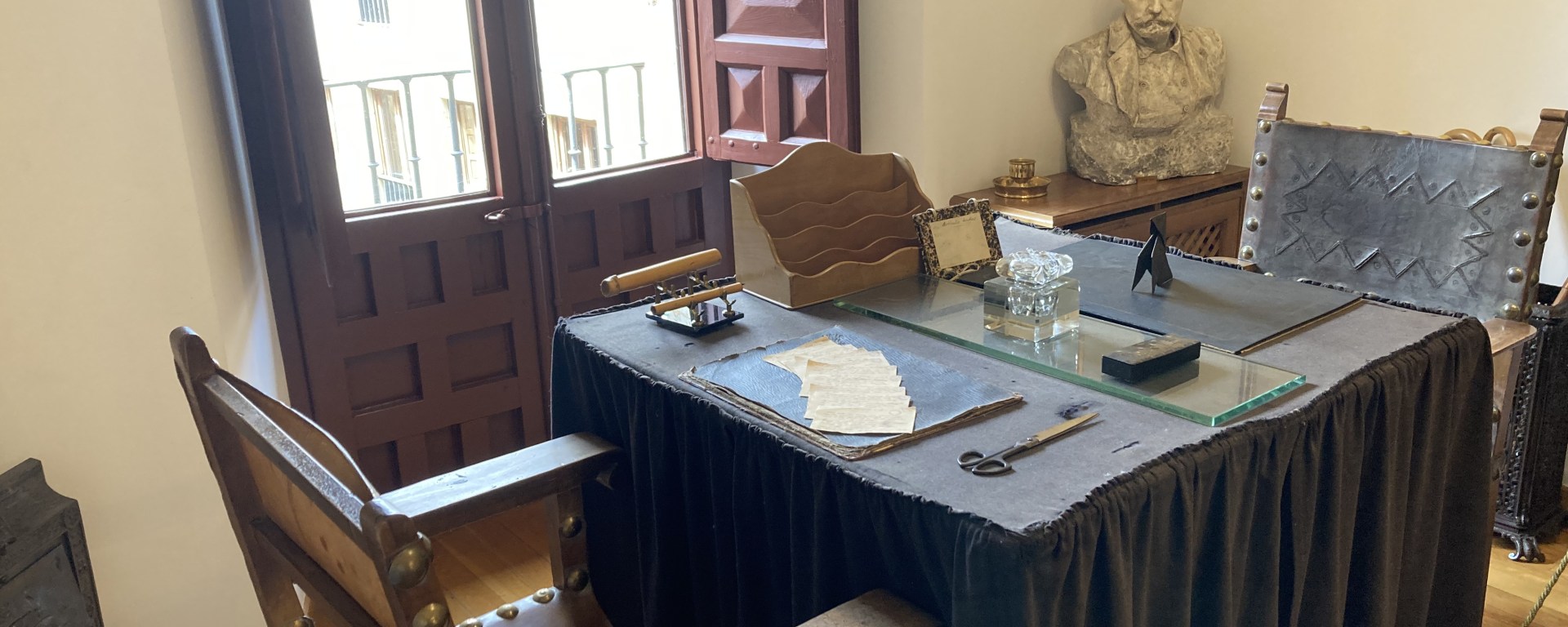
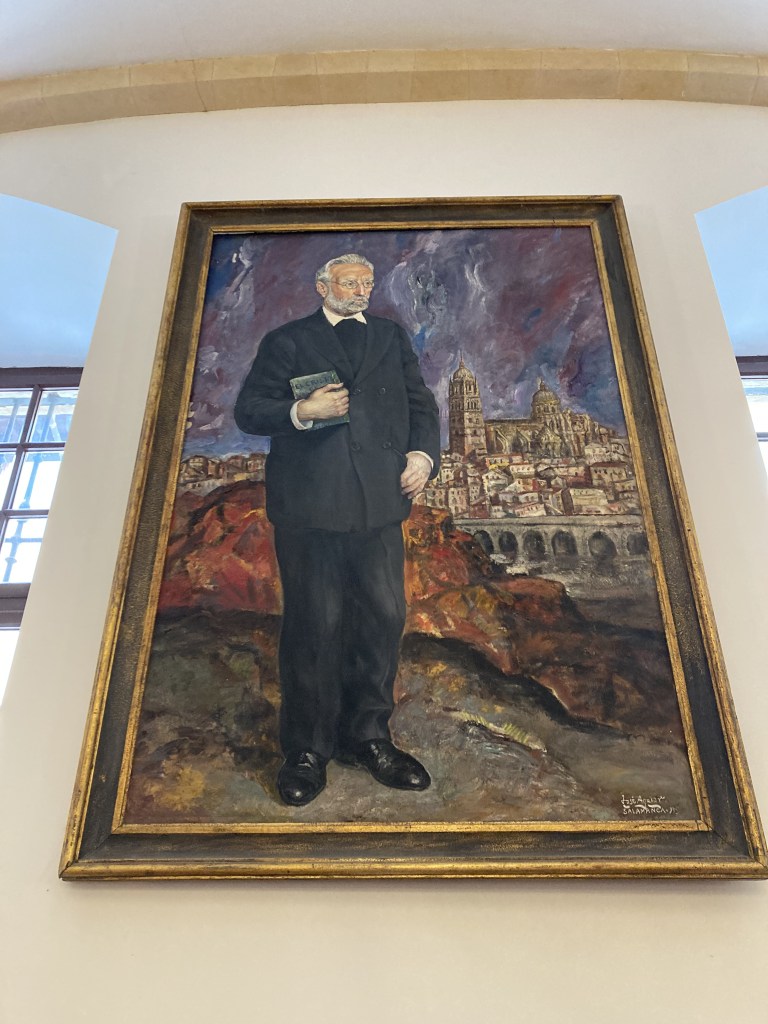
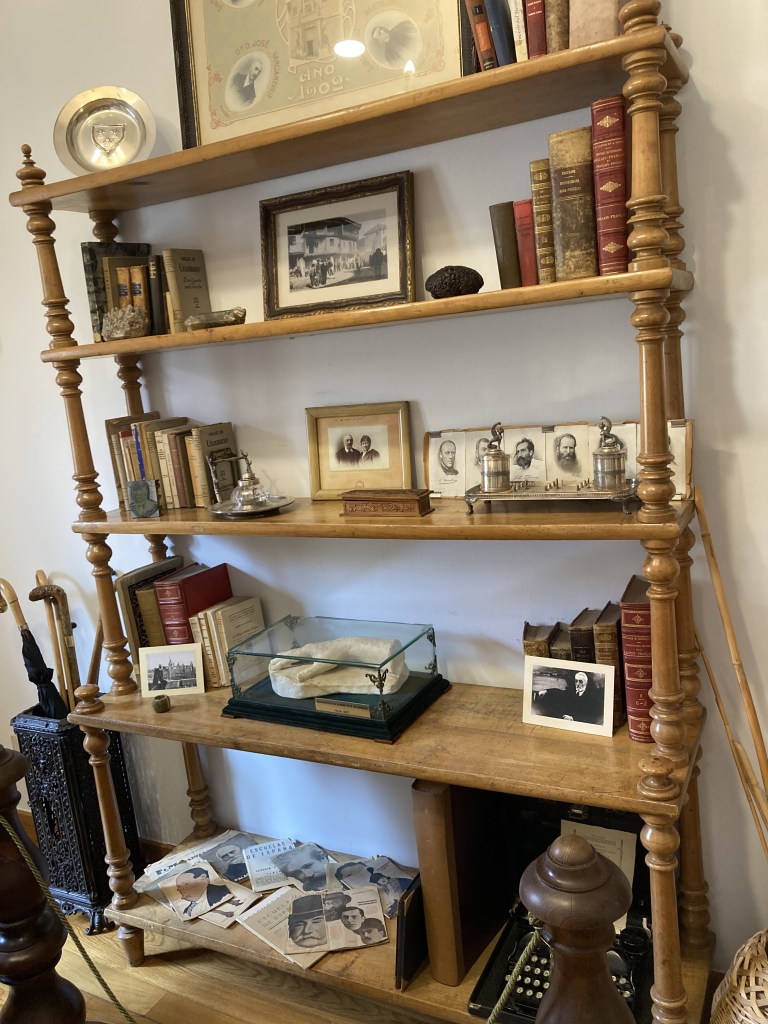
From there, our guide showed us around the building, including Unamuno’s house, which gives the visitor the opportunity to envision the great writer sitting at his desk, surrounded by books, and writing his great works, or relaxing in his rocking chair next to the balcony from where he would watch the activity on the street below. Beautiful artwork suitable for exhibition at any of the great art museums in the world hangs in all parts of the building. A lot of the artwork was either created by Unamuno himself or was inspired by Unamuno, even his own origami creations were on display. (All photos below are from inside the Casa-Museo Unamuno and were taken by my wife and me.)
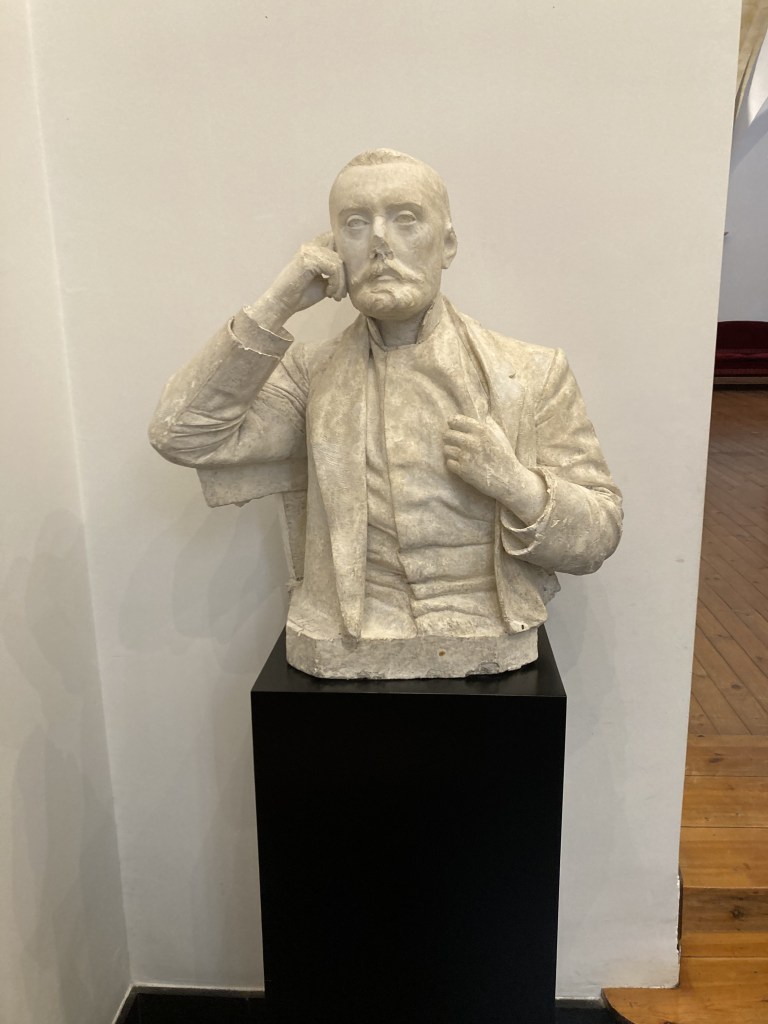

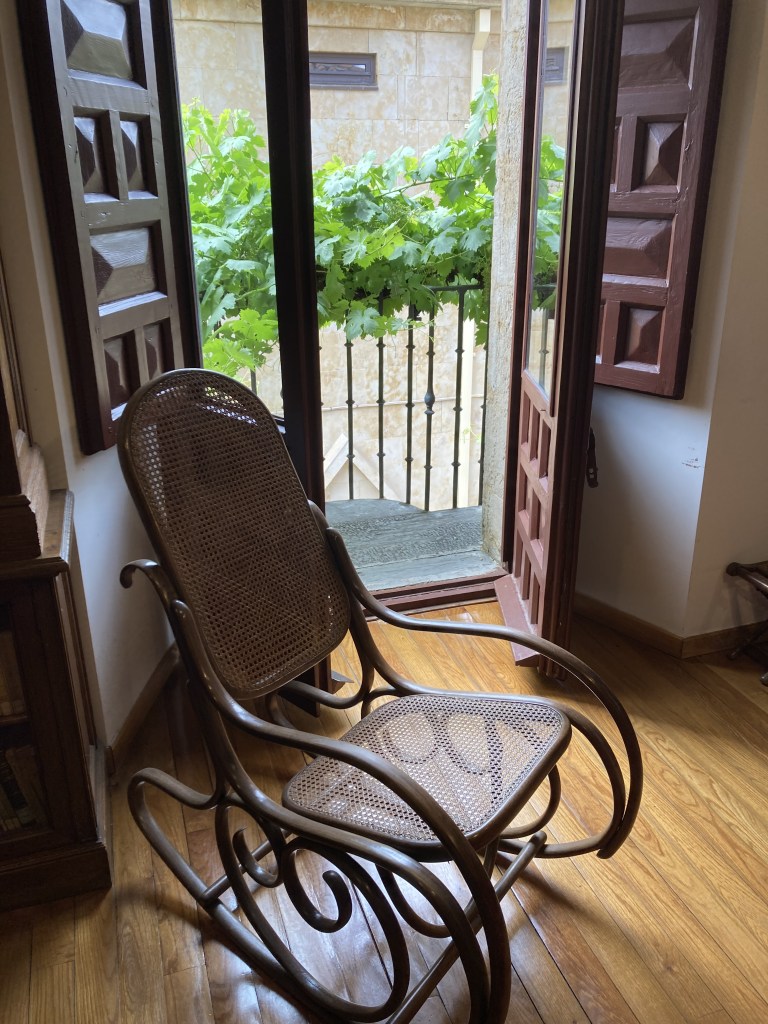


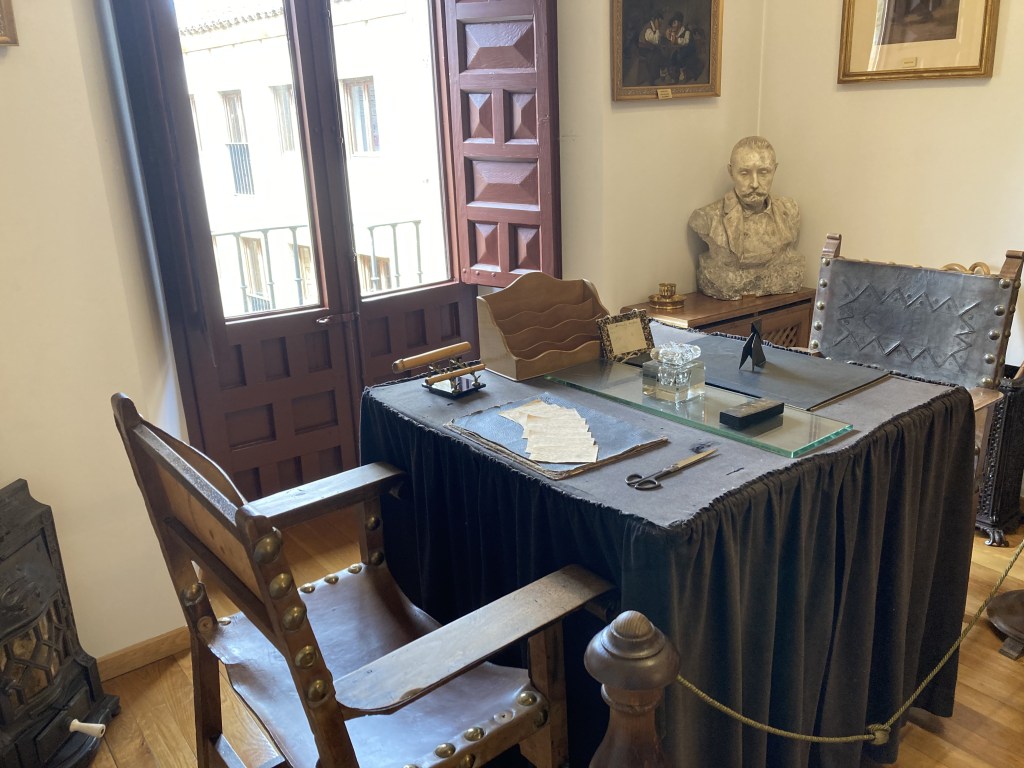
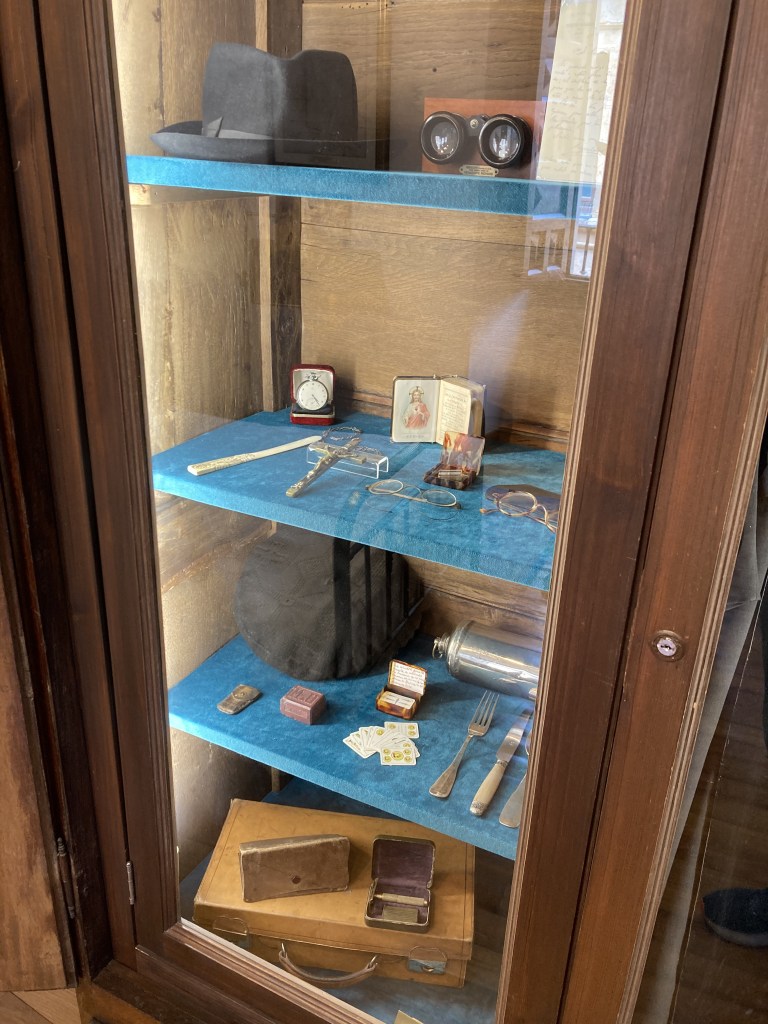
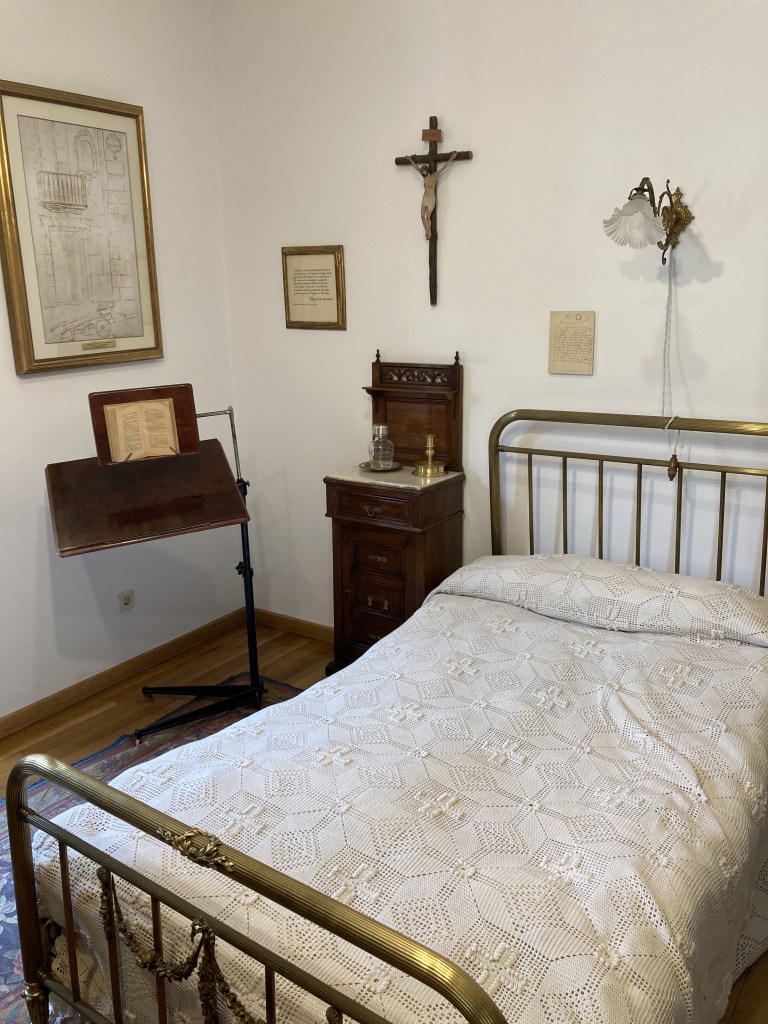
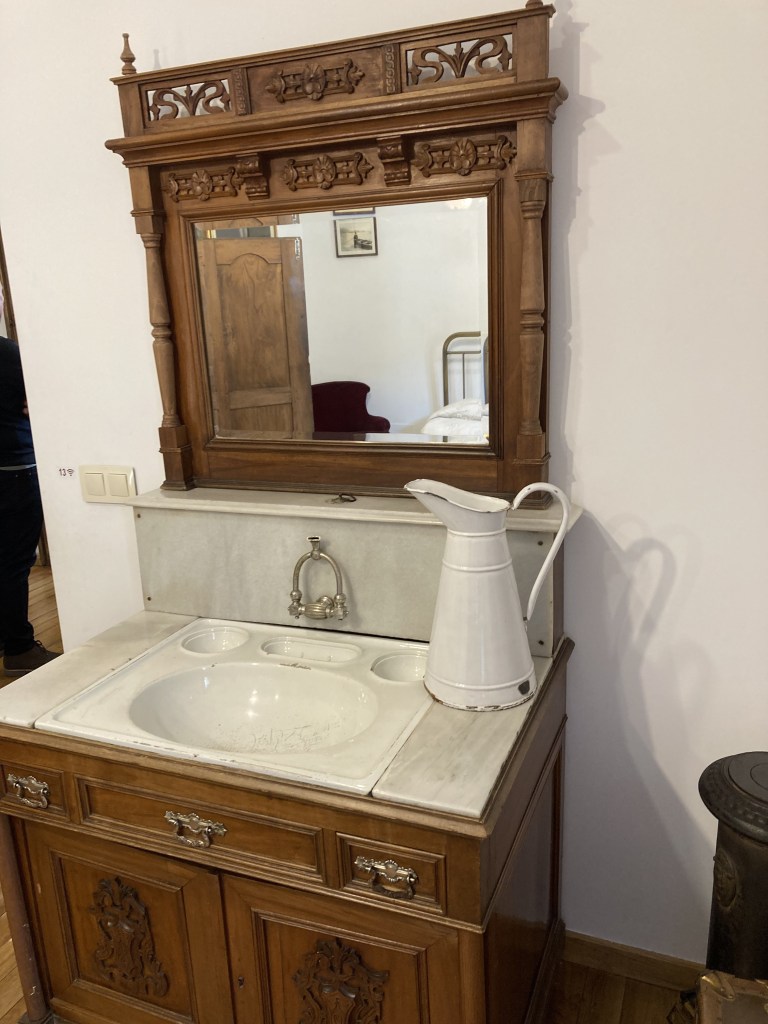


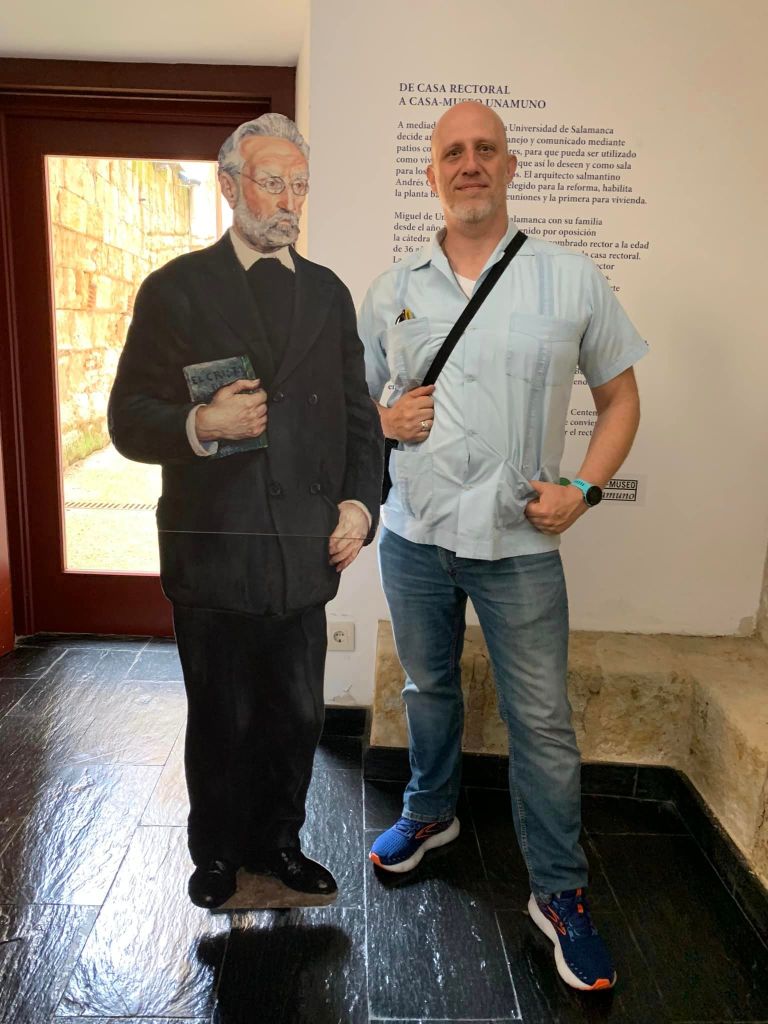
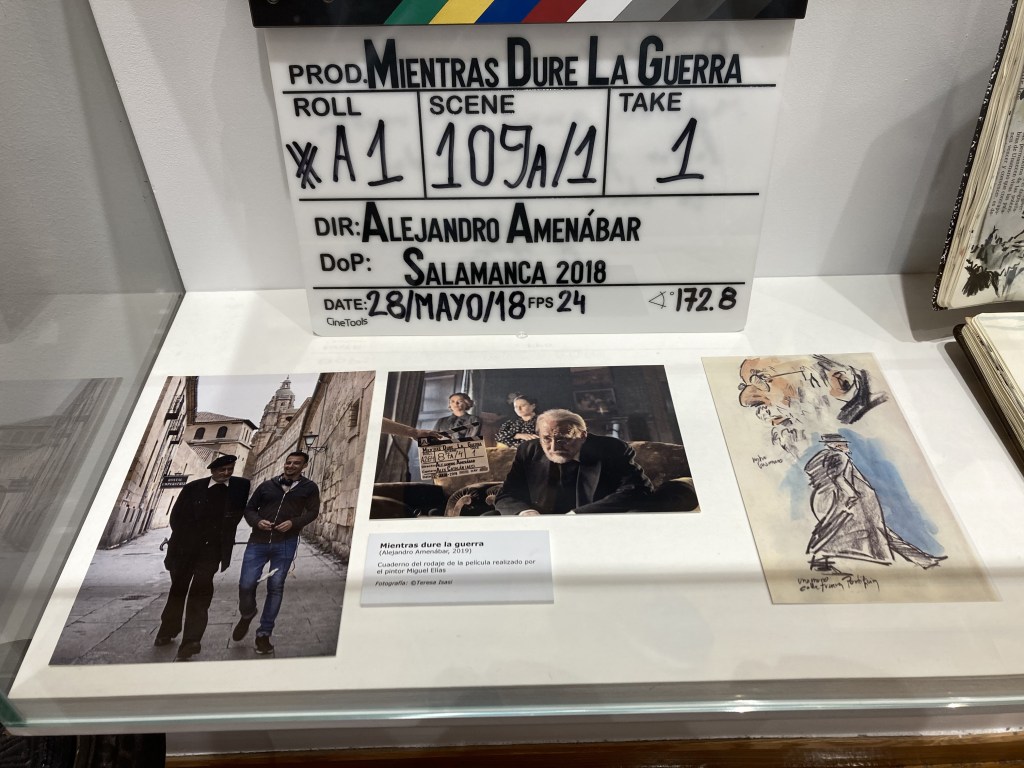
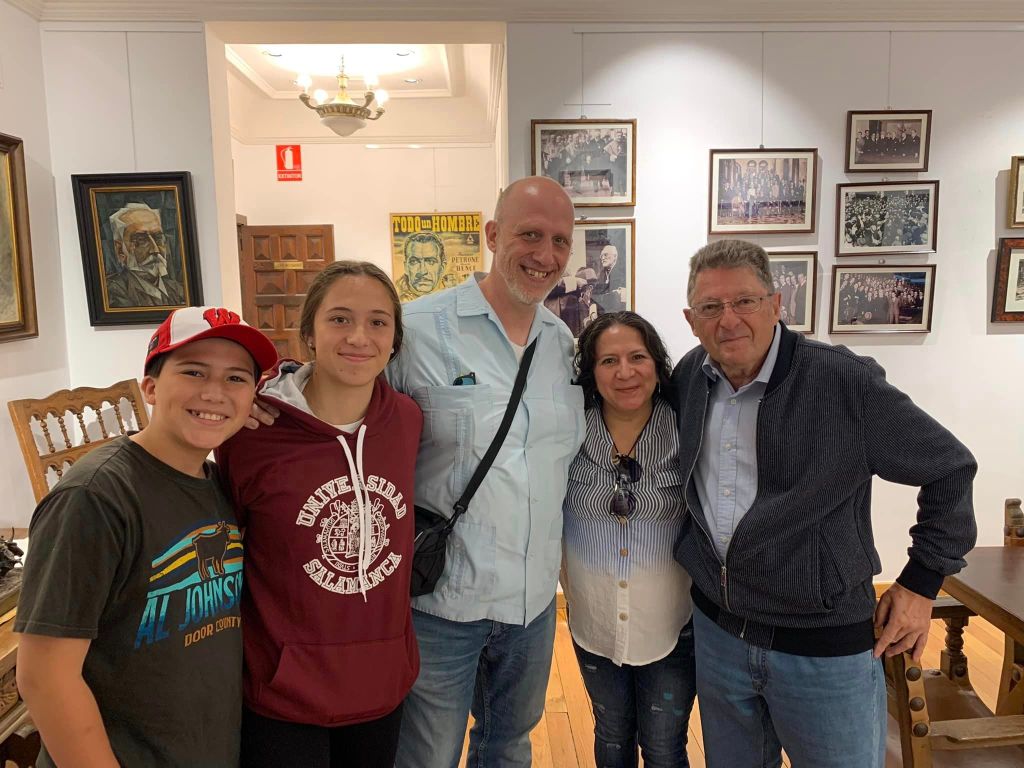
Our tour guide – I’m embarrassed to admit that I forgot his name – was very attentive and knowledgeable, and he was able to answer all of our questions. He clearly isn’t a stereotypical tour guide who just memorized a bunch of facts. And he is more than just a fan of Unamuno; he is a serious investigator into Unamuno’s life and works. And the highlight of the tour was an experience that we would not have had if we had visited on any other day or at any other time. In one room, there were some workers attending to some matters from Unamuno’s archives, and our guide pointed out one of them, who happens to be one of Unamuno’s grandsons, Pablo. What a surprise! He happily greeted us and even let us take a picture with him. He certainly would have been too young to remember his famous grandfather, but it’s nice to see that the family continues to take an interest in their patriarch’s affairs. It was an experience my wife and I will never forget, and I hope that my kids will one day be able to read Unamuno’s work and look back fondly on our experience at the casa-museo.
Admission to the museum is only four euros, but there are the typical discounts for students and retired people. Children under 12 are admitted for free. It’s really a small price to pay for so much history; of course, I’m not sure how much a non-speaker of Spanish who is unfamiliar with Unamuno would get out of this experience, but a healthy curiosity and an open mind will help one to take an interest in the subject matter.
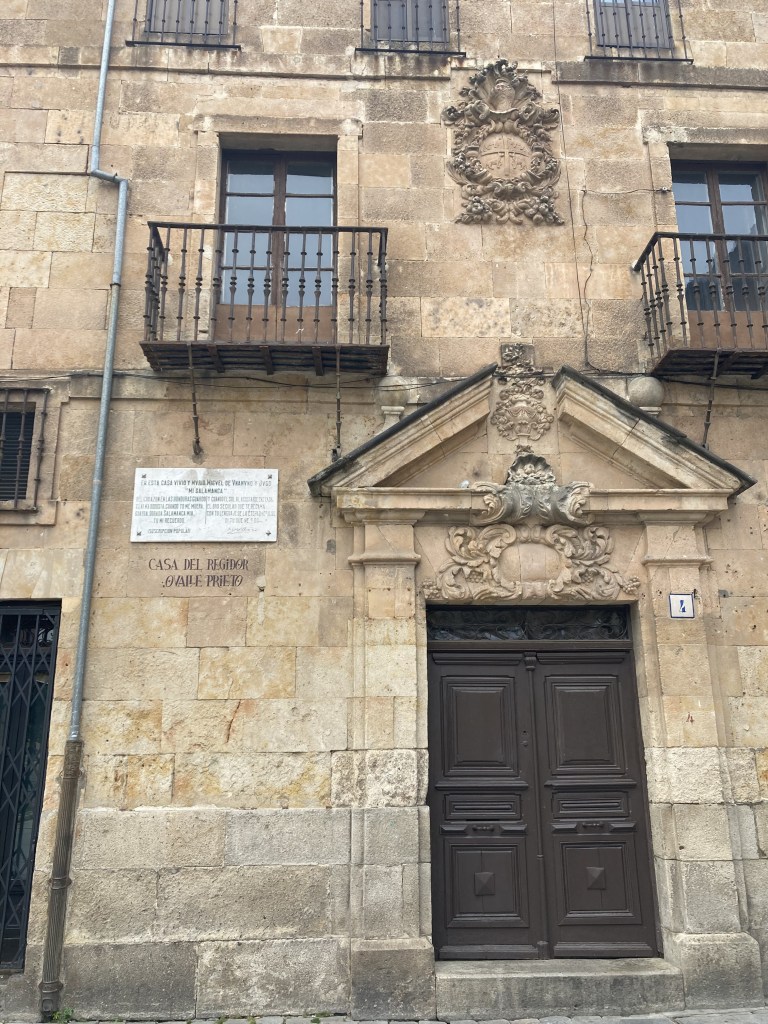
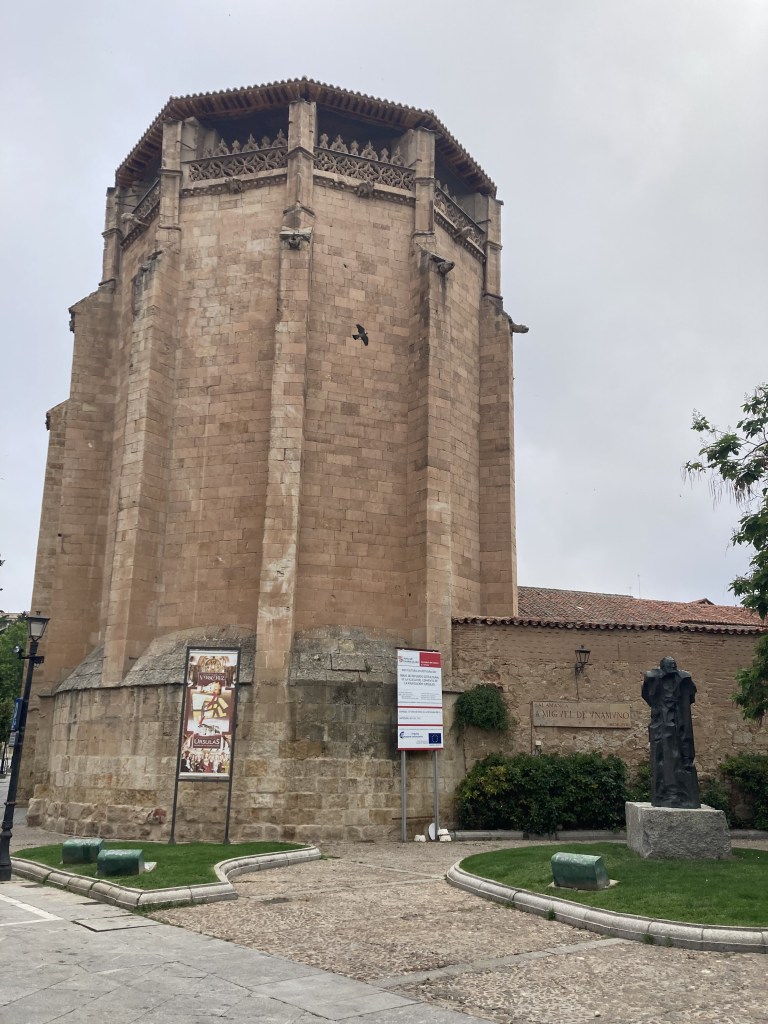
Before leaving the museum, our guide told us about the other house in Salamanca where Unamuno lived until he died under suspicious circumstances at the outset of the Civil War. Although this house is not open to the public, we went by and visited it from the outside and took some pictures. There is a statue dedicated to Unamuno across the street from the house. Because Unamuno had the reputation for taking long walks at night in Salamanca, throughout the rest of our stay I also enjoyed walking at night through the same picturesque streets that he did, imagining what it would be like to see him out for a stroll. Salamanca is truly a place where history comes alive and causes one’s imagination to feel a part of it.

Are you a fan of Miguel de Unamuno’s works? Let us know which ones are your favorites in the comments below. And if you enjoyed this post, please share it on your favorite social media. ¡Gracias!


 Hispanophilia